Best Time to See Mount Fuji: A Month-by-Month Visibility Guide
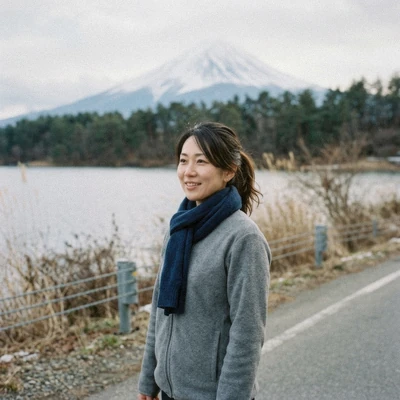
The best time to see Mount Fuji is December to February, when the mountain shows itself on roughly 60 to 70 percent of days, well ahead of any other season. I have driven the Tokyo to Kawaguchiko route since 2013, and the pattern holds year after year: cold, dry winter air strips away the haze that hides the cone all summer. This guide breaks visibility down month by month, explains why a clear Tokyo sky tells you nothing about the mountain, and covers what to do when your dates don't fall in the good months at all.
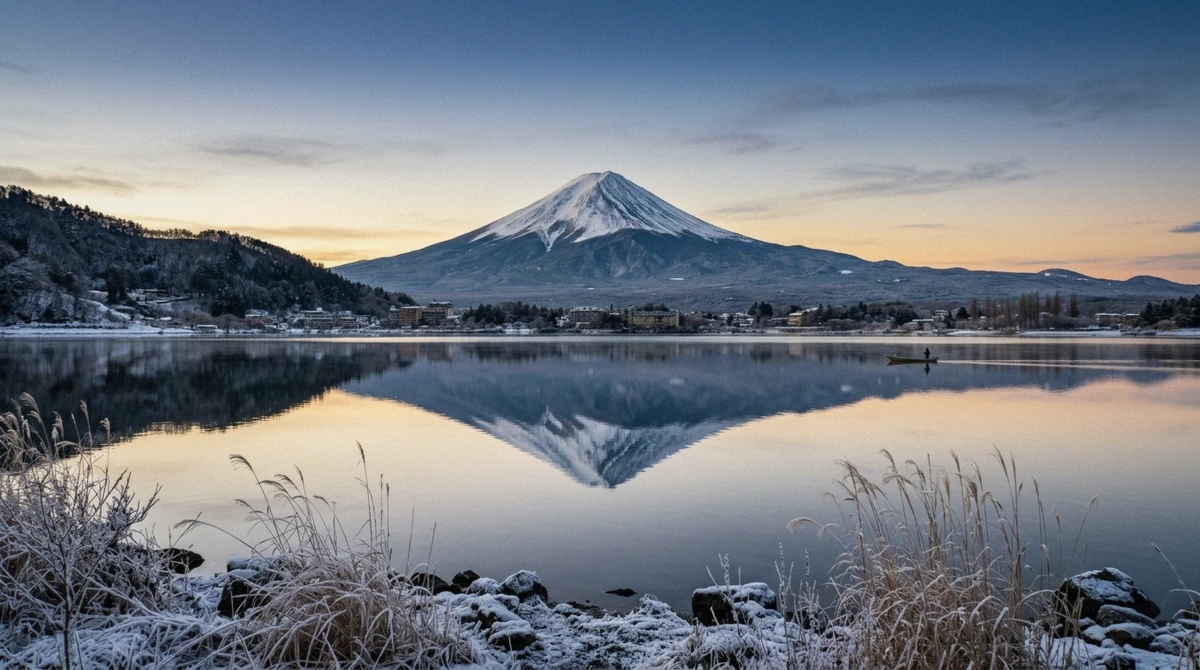
Quick answer
The best time to see Mount Fuji is December to February, when the mountain is visible on roughly 60 to 70 percent of days. Early morning gives the clearest view in every season, and the honest trade-off in winter is real cold at altitude and a 5th Station road that can close on short notice after snow.
Key takeaways
- Winter (December to February) is the clearest season, showing the mountain on 60 to 70 percent of days
- Summer (June to September) is the weakest window, visibility drops to 20 to 30 percent, and the Subaru Line is closed to private cars for most of it
- Fuji is clearly visible on about 80 days a year from the Kawaguchiko side, no single month guarantees a sighting
- Haze builds fast after sunrise; a mountain that is out at 7:00 is often gone by 10:00
- Cherry blossoms frame Chureito Pagoda in early to mid April, right as visibility odds are already sliding
- A private driver can reorder the day toward whichever side of the mountain looks clearer, a fixed bus stop cannot do that
Mount Fuji Visibility by Month and Season
Two hard numbers carry most of the weight in the table below. Winter (December to February) shows Fuji on 60 to 70 percent of days; summer (June to September) drops to 20 to 30 percent. Every other month sits somewhere on the slope between those two extremes, so read the columns as typical conditions, not a promise for your specific date.
One operator says the same thing in plain terms in its own listing: Fuji is clear only 70 to 80 days a year and can hide behind cloud on a sunny Tokyo day, exactly the pattern this table is built around (see that tour).
| Month | Typical Visibility | Weather | Crowds | Verdict |
|---|---|---|---|---|
| January | High | Cold and dry, clearest air of the year | Low, quiet lake towns | Best overall |
| February | High | Cold, occasional snow at altitude | Low, some holiday traffic | Best overall |
| March | Moderate to High | Milder air, humidity starting to build | Moderate, spring break edges in | Good, odds softening |
| April | Moderate | Warmer, humidity rising | High, sakura crowds at Chureito | Good light, crowded platform |
| May | Moderate | Humid, occasional rain | High, Golden Week holiday crush | Avoid the Golden Week week |
| June | Low | Rainy season sets in | Moderate | Weak window begins |
| July | Low | Hot, hazy, one of the wettest stretches | Moderate | Worst month, Subaru Line ban starts 3 July |
| August | Low | Hot, humid, thick midday haze | High, summer holidays | Private cars still banned from the Subaru Line |
| September | Low to Moderate | Typhoon risk, air starting to dry | Moderate | Subaru Line ban ends 10 September |
| October | Moderate | Cooler, drier air returning | Moderate | Odds climbing back |
| November | High | Crisp, clear autumn air | Moderate, leaf-viewing season | Odds near winter levels |
| December | High | Cold, very dry | Low | Winter clarity begins |
November edges out October for the best autumn odds, and April's sakura window is the one month where a strong crowd and a fading mountain view happen at the same time, an honest trade worth knowing before you build a trip around Chureito Pagoda.
| Season (Months) | Chance Fuji Is Out | Weather | Crowds | Verdict |
|---|---|---|---|---|
| Winter (December to February) | 60 to 70 percent | Cold, dry, clearest air of the year | Low | Best overall |
| Spring (March to May) | Falling from roughly half to a third | Milder, humidity building, Golden Week crush in May | Rising, peaks in April | Good light, crowded April to May |
| Summer (June to September) | 20 to 30 percent | Hot, humid, rainy into typhoon risk | High, summer holidays | Hardest season, Subaru Line closed to private cars |
| Autumn (October to November) | Climbing back toward winter levels | Cooling, drying, clear autumn air | Moderate, leaf season in November | Second-best window |
If a single window has to work, winter wins on the numbers alone. If you are locked into travel dates in July or August, plan for a driver who can chase gaps in the cloud rather than betting everything on one fixed viewpoint.
Winter (December to February): The Reliable Window
Winter is the season I tell most photographers and repeat visitors to book. Clear, dry air strips away the haze that ruins so many summer mornings, and the mountain often holds its shape from sunrise straight through midday, something June through September rarely manages.
Mornings at Lake Kawaguchi, roughly 830 metres, typically run around -5 to 5 degrees Celsius on a clear day, so layers matter more than one heavy coat you can't take off. The 5th Station at 2,300 metres runs about 10 degrees colder again, and the access road there can close on short notice after a heavy snowfall, so build one flexible morning into a winter trip rather than a single fixed date. Crowds thin out everywhere except the New Year holiday week, and tours running an early, timed start make the most of the short winter daylight.
- Typical temperature at Lake Kawaguchi: -5 to 5 degrees Celsius on a clear morning
- 5th Station (2,300 metres) runs about 10 degrees colder again
- Book at least a few days ahead outside the New Year holiday week
- 5th Station road access can close on short notice after snow
Spring (March to May): Blossoms, Fading Odds
Spring opens with decent odds and closes with the year's worst crowd-to-clarity trade. March still carries some of winter's clean air, but by April humidity is climbing and the mountain hides more mornings than it shows.
Early to mid April is also when cherry blossoms frame Chureito Pagoda, the single most photographed angle on Fuji anywhere in Japan, and the 398-step platform gets genuinely crowded on a clear morning during that window (full timing and access details live on our best Mount Fuji photo spots guide). Late April into early May brings Golden Week, Japan's biggest domestic holiday cluster, when the Fuji Five Lakes and the Chuo Expressway both fill up regardless of the weather. Anyone locked into those dates should book the earliest slot available and expect company at every stop.
- Early March still carries some winter clarity
- Early to mid April: sakura at Chureito Pagoda, worth the crowd on a clear morning
- Avoid the last week of April into the first week of May, Golden Week holiday traffic
- Book Golden Week dates weeks ahead, not days
Summer (June to September): The Hardest Season
Summer is the season I am most honest about. June and July are the worst months on the calendar for actually seeing the mountain, humidity and haze build fast after sunrise, and a clear afternoon in Tokyo tells you nothing about what is happening 100 kilometres away at the cone.
The access story compounds the visibility story. Private vehicles are banned from the Fuji Subaru Line from 3 July to 10 September 2026, so any tour reaching the 5th Station in that window runs on the Fujikyu shuttle instead of driving straight up (the full mechanics, fares and exemptions live on our DIY Fuji day trip guide). Lavender comes into bloom at Oishi Park in late June and early July, the honest either-or of this season: the best purple foreground shot of the year lands squarely inside the worst window for actually seeing what is behind the flowers.
- June to July: the two weakest visibility months on the calendar
- 3 July to 10 September 2026: private cars banned from the Subaru Line, shuttle only
- Late June to early July: Oishi Park lavender blooms, best foreground, worst mountain odds
- September: typhoon risk trails off as the ban lifts
Autumn (October to November): The Odds Return
Autumn is the season most visitors skip and probably shouldn't. Visibility climbs back toward winter levels through October and November as the air dries out and the haze built up over summer finally clears.
November is also when the maple and ginkgo color around Lake Kawaguchi peaks, giving a foreground almost as strong as spring's cherry blossoms without anywhere near the crowd. I run this loop most Novembers myself and the lake road stays open and quiet even on a weekend. October sits a notch behind November for both color and odds, but it is the calmer month to book on shorter notice if your schedule only allows a narrow window.
- October: odds climbing, fewer crowds than any other good-visibility month
- November: odds near winter levels, maple and ginkgo color peaks around Lake Kawaguchi
- Both months book out less aggressively than April or Golden Week
- Good backup window if winter dates are unavailable
What Actually Decides Whether Fuji Shows
Most people assume a clear Tokyo sky means a clear mountain, and that assumption is wrong more often than it is right. Fuji makes its own weather. Warm, humid air rising off the Pacific and the Kanto plain condenses into cloud and haze around the cone well before it reaches Tokyo's skyline, so a sunny day in the city can sit alongside a mountain wrapped in its own private cloud bank 100 kilometres away.
That is also why winter wins so clearly. Cold, dry continental air holds far less moisture, so there is simply less material available to condense into haze around the peak. Summer's warm, saturated air is the opposite condition, and it is why the 20 to 30 percent summer figure and the 60 to 70 percent winter figure are not a coincidence of timing but a direct result of how much water is sitting in the air that day.
Best Time of Day
Morning is not a preference here, it is close to the whole game. Whatever the season, the mountain is far more likely to be out at first light than at any other hour, which is why so many operators, including a tour built around an early, timed pickup, run 6:30 or 7:00 departures instead of a leisurely mid-morning start.
The physics work against you as the day goes on. Ground heat builds through the morning and pushes haze and cumulus cloud up around the cone, so a mountain that was fully visible at 7:00 is very often gone by 10:00, sometimes earlier in summer. If your one photo of the trip matters, protect the early morning window and treat anything after 10:00 as a bonus rather than the plan.
Crowds and Prices Through the Year
Three weeks a year genuinely change the experience: late April into early May for Golden Week, early to mid April for the Chureito Pagoda cherry blossom crowd, and the New Year holiday week from late December into early January. On all three, book the earliest slot you can and expect the 398 steps at Chureito or the Chuo Expressway itself to be genuinely busy, not just a bit more crowded than usual.
Outside those weeks, weekday mornings are consistently the quietest option in every season, and off-peak winter weekdays are when I have the most flexibility to hold a stop longer or add an extra viewpoint for a group. Private tours don't publish seasonal surge pricing the way flights do, but expect earlier booking windows and tighter availability around all three named weeks, regardless of season.
What If the Mountain Doesn't Show?
A no-show mountain does not have to be a wasted day if the tour is flexible about it. A fixed bus itinerary commits to one viewpoint on a set schedule, so if cloud is sitting over that specific spot, the group is stuck with it. A private driver can reorder the stops toward whichever side of the mountain looks clearer that morning, hold longer at Chureito Pagoda if the light is working there, or add a lake stop that still delivers a strong day even without the cone in frame.
I have never had a private group leave the Fuji Five Lakes with nothing worth photographing, even on mornings the summit stayed hidden all day. Whether that flexibility justifies a private car's price at all is a separate question, and our honest worth-it verdict weighs it properly. Rebooking honesty matters too: check what your specific operator's weather policy actually says before you go. Best effort and a guaranteed reschedule are two very different promises, and neither is a given just because the tour is private.
Best Window by Traveler Type
If You're a photographer chasing the highest odds
December to February mornings, 60 to 70 percent odds and the cleanest air of the year.
If You want the cherry blossom shot at Chureito
Early to mid April, and accept the year's biggest crowd on the 398-step platform.
If You're traveling on a budget
October or November weekdays, cheaper availability than April or Golden Week with odds most of the way back to winter levels.
If Summer is your only window
Book a 6:30 pickup, treat the mountain as a bonus rather than the plan, and lean on Lake Kawaguchi and Oshino Hakkai regardless of whether the cone shows.
So, When Should You Go?
If a single window has to work, take December through February: the clearest air of the year and the best odds by a wide margin. If those months don't fit, November is the strong runner-up, with autumn color and odds most of the way back to winter levels for less crowd and less cost than April. The one month to actively avoid is July, the lowest odds of the year paired with the Subaru Line's private-car ban already in effect.
Whatever month you land on, the biggest lever you actually control is the time of day, not the season. Book the earliest slot on offer, and consider a private driver who can chase the clear side of the mountain rather than a fixed bus stop that commits you to one viewpoint regardless of what the cloud is doing that morning.
Frequently Asked Questions
Which month has the best chance of a clear Mount Fuji?
December, January and February together, when the mountain shows on roughly 60 to 70 percent of days. Any single one of those three months is a strong bet on its own.
What time of day is Mount Fuji most visible?
Early morning, before the day's heat builds haze around the cone. A mountain that is out at 7:00 is often gone by 10:00, which is why so many private departures start at 6:30 or 7:00.
Is Mount Fuji visible in the summer at all?
Sometimes, but rarely. Visibility drops to about 20 to 30 percent of days in June through September, and the mountain is most likely to appear briefly right after sunrise before haze sets in.
When do the cherry blossoms bloom near Mount Fuji?
Roughly early to mid April at Chureito Pagoda and Arakurayama Sengen Park. It's the single most photographed sakura-and-Fuji frame in Japan, and the platform gets crowded on any clear morning in that window.
When is the best time to see autumn leaves near Mount Fuji?
November, when maple and ginkgo color peaks around Lake Kawaguchi at the same time visibility odds are climbing back toward winter levels.
What happens if Mount Fuji is hidden by cloud on my tour day?
A good private driver reorders the stops toward the clearer side of the mountain or the strongest available light rather than sitting at one fixed viewpoint. Check your specific operator's weather policy before booking, since best effort and a guaranteed reschedule aren't the same promise.
How cold does it get at the 5th Station in winter?
Lake Kawaguchi runs about -5 to 5 degrees Celsius on a clear winter morning, and the 5th Station at 2,300 metres is roughly 10 degrees colder again. Dress in layers, and expect the access road to close on short notice after a heavy snowfall.