Best Photo Spots for Mount Fuji: 9 Locations Worth the Shot
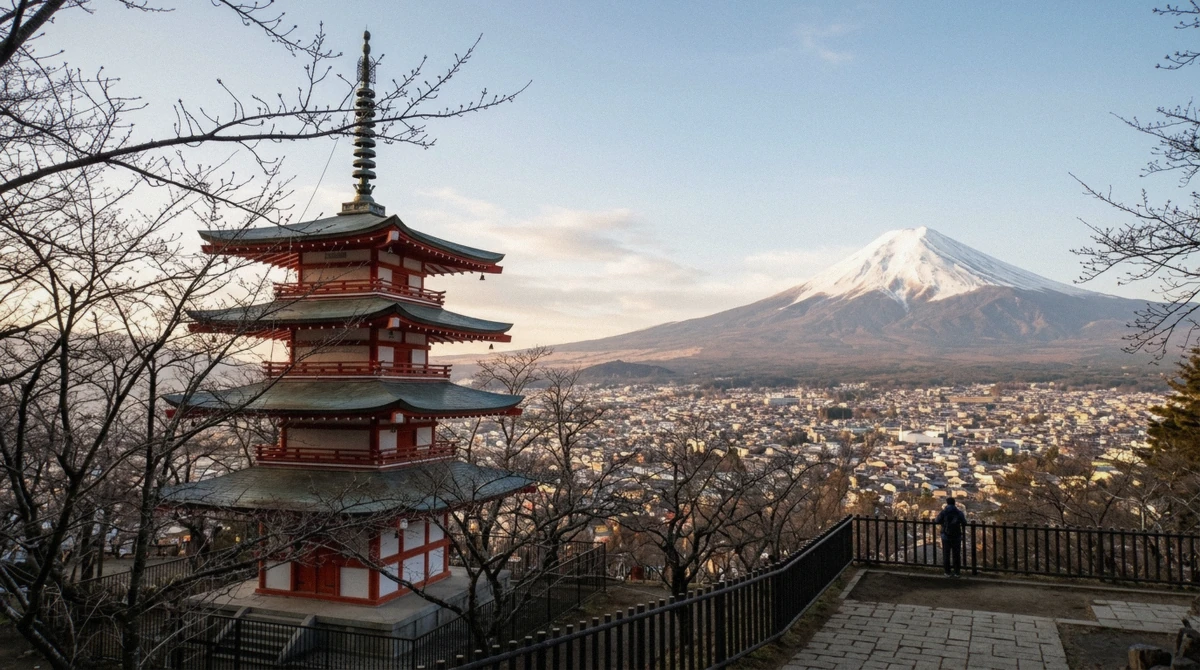
The best mount fuji photo spots start with Chureito Pagoda, the five-storey vermilion tower above Fujiyoshida that delivers the single most photographed frame of the mountain anywhere in Japan. This guide covers nine locations in total, ground shots you can drive or walk to yourself and the frames a private route sequences for you, each with a clock window, GPS coordinates and the real access rules. It also covers what most spot lists skip: camera settings for pre-dawn cold and still-water reflections, the actual drone rules, and which tours reach the spots that genuinely need a car.
Quick answer
The single best of the mount fuji photo spots is Chureito Pagoda, where the five-storey tower and the snow-capped cone share one frame above Fujiyoshida. From there, the spots split two ways: the ground shots anyone can walk or drive to, and the frames a private route sequences for you in the right order and the right light, which a fixed bus stop or a solo rental car rarely manages in one morning.
Key takeaways
- Chureito Pagoda is the number one spot, 398 steps up, free, open around the clock
- All 9 spots sit on the numbered map below, with car-only and tour-relevant pins marked separately
- Lake Motosu and the 5th Station reward a driver who can time the light better than a solo rental
- Best light everywhere is roughly 30 minutes after sunrise; by 10:00 the mountain is often flat-lit or wrapped in cloud (full visibility odds by month live on our best-time guide)
- A wide-angle lens or phone handles most spots, a longer lens helps only at the 5th Station and Mount Tenjo
Photo Spots at a Glance
Every spot below as one row. Fees apply only where noted; everything else is free once you're standing there.
| Spot | Best time | The shot you get | How to get there | Fee |
|---|---|---|---|---|
| 1. Chureito Pagoda | Before 8:00, low side-light | Pagoda tiers with Fuji rising behind Fujiyoshida | 398 stone steps up from Arakurayama Sengen Park | Free |
| 2. Lawson Kawaguchiko Station | Any time, quietest before 8:00 | The viral shot, Fuji framed above the store's blue sign | Roadside near Kawaguchiko Station, on foot | Free |
| 3. Oishi Park | Year-round; lavender late June to early July | Flower foreground against the lake and the mountain | Northern shore of Lake Kawaguchi, by car or bus | Free |
| 4. Ubuyagasaki | Dawn, 6:00 to 7:00 | Sakasa Fuji, the inverted reflection on still water | Peninsula on Lake Kawaguchi, short walk from parking | Free |
| 5. Tenku no Torii | Early morning, before haze builds | A vermilion torii framing Fuji from a grassy shoulder | About 30 minutes uphill on foot from Kawaguchi Asama Shrine, easiest by car | Free |
| 6. Lake Motosu | Early morning, calm water | The view printed on the ¥1,000 note | Effectively car-only from the Kawaguchiko side | Free |
| 7. Lake Yamanaka | Any time, calmest mornings | Swan boats in the foreground, the highest and quietest of the five lakes | By car or bus around the eastern shore | Free |
| 8. Mount Tenjo | Late morning, clear air | An elevated frame of the lake and the cone together | Mount Fuji Panoramic Ropeway from Kawaguchiko's south shore | ¥1,000 round trip adult (as of July 2026) |
| 9. Fuji Subaru Line 5th Station | Late morning, above the cloud line | The above-the-clouds frame at 2,300 metres | By car, or the Fujikyu shuttle 3 July to 10 September 2026 | Subaru Line toll ¥2,800 per vehicle, doesn't apply to the shuttle |
None of these nine need a special permit for personal photography, and only the ropeway and the Subaru Line toll charge a fee at all. Spots 2 through 7 sit within a single Fuji Five Lakes morning; spot 9 needs its own weather-dependent window since the road can close without notice.
Map of the Best Photo Spots
Spots 2, 3, 4 and 7 are reachable by bus or on foot from the Kawaguchiko lake shore. Spots 6, 5 and 9 are effectively car-only or reward a private driver who can time the light, marked here in amber.
The 9 Best Photo Spots
1. Chureito Pagoda
The shot you get: the five-storey vermilion Chureito Pagoda in the foreground with the snow-capped cone rising directly behind the rooftops of Fujiyoshida, the single most photographed angle on Fuji in the country. Best time: arrive before 8:00 for low side-light and a quiet platform; on a clear morning the light holds well past that. GPS: 35.5017, 138.8010, in Arakurayama Sengen Park.
Access: 398 stone steps up from the park entrance, free, open around the clock. Crowd workaround: in early to mid April, when cherry blossoms frame the pagoda, the viewing platform gets a real queue by mid-morning, so the pre-8:00 window matters even more than usual.
2. Lawson Kawaguchiko Station
The shot you get: Fuji framed directly above the store's blue-and-white sign, the viral convenience-store shot that shows up on every feed from this area. Best time: any time of day the mountain is out, but before 8:00 avoids the roadside crowding that builds later. GPS: 35.5030, 138.7623, on foot near Kawaguchiko Station.
Rules: this is a working roadside, not a designated viewpoint. Stay on the pavement, never step into the road for the frame, and expect a marshal directing foot traffic during peak sakura and autumn weeks. A twelve-stop private route that already includes this stop takes the guesswork out of finding parking nearby.
3. Oishi Park
The shot you get: a flower foreground, lavender in late June and early July, against the lake and the mountain beyond the far shore. Best time: any morning works, but the lavender window is specifically late June into early July, the same weeks visibility odds are at their weakest for the year. GPS: 35.5245, 138.7461, on the northern shore of Lake Kawaguchi.
Access: free, reachable by car or the local Retro Bus. Crowd workaround: the boardwalk gets busy on weekend mornings during peak lavender bloom; a weekday visit or an earlier start avoids most of it.
4. Ubuyagasaki
The shot you get: Sakasa Fuji, the mountain's inverted reflection splitting the frame on still water. Best time: dawn, roughly 6:00 to 7:00, before any wind breaks the surface. GPS: 35.5090, 138.7570, a peninsula on Lake Kawaguchi's western shore.
Access: free, a short walk from roadside parking. Physical note: the shoreline rocks are uneven and can be slick with dew at dawn, worth a headlamp and careful footing rather than rushing in the dark.
5. Tenku no Torii
The shot you get: a vermilion torii gate standing on a grassy shoulder with Fuji filling the space inside it, one of the more dramatic compositions on this list. Best time: early morning, before haze thickens over the valley below. GPS: 35.5228, 138.7834, above Kawaguchi Asama Shrine.
Access: about 30 minutes uphill on foot from the shrine, or a short drive if you have one; this is genuinely easier by car. A twelve-stop menu tour covers this climb along with the Lawson shot in a single loop, useful if you'd rather not manage the uphill walk on your own schedule.
6. Lake Motosu
The shot you get: the exact view printed on Japan's ¥1,000 note, the mountain rising cleanly over open water with almost none of the development visible at the other lakes. Best time: early morning, when the water is calmest and clearest. GPS: 35.4626, 138.5859, the westernmost and least developed of the Fuji Five Lakes.
Access: effectively car-only from the Kawaguchiko side; public transport here is sparse and slow. A tour running a guided photo session with lunch included reaches this lake specifically, timing the stop for the shot rather than treating it as a drive-by.
7. Lake Yamanaka
The shot you get: white swan-shaped pedal boats moored along the shore as foreground, Fuji rising behind the tree line, the highest and quietest of the five lakes. Best time: any time of day, mornings are calmest for reflections. GPS: 35.4181, 138.8659, on the eastern edge of the Fuji Five Lakes.
Access: free, reachable by car or local bus. Crowd workaround: this lake sees noticeably fewer visitors than Kawaguchi, a good pick if you want the classic frame without company in it.
8. Mount Tenjo
The shot you get: an elevated frame combining Lake Kawaguchi and the cone together, a genuinely different angle from every lakeside spot on this list. Best time: late morning once any overnight mist has cleared, though the ropeway runs the same hours as most of the day. GPS: 35.5026, 138.7729, reached by the Mount Fuji Panoramic Ropeway from Kawaguchiko's south shore.
Fee: ¥1,000 round trip for an adult, verified July 2026 (¥600 one-way). Access: a short ropeway ride, no hiking required for the summit view.
9. Fuji Subaru Line 5th Station
The shot you get: the above-the-clouds frame, standing at 2,300 metres with a genuine sea of cloud below the terrace edge on a good morning. Best time: late morning, once the road authorities have opened and any early haze has settled below the station itself. GPS: 35.3966, 138.7328.
Access: by private car outside the summer restriction, or by the Fujikyu shuttle from 3 July to 10 September 2026 when private vehicles are banned from the Subaru Line (full mechanics on our DIY Fuji day trip guide). Fee: the Subaru Line toll is ¥2,800 per vehicle, and doesn't apply if you're riding the shuttle; our cost breakdown explains what that toll does and doesn't buy. Physical note: thin air at altitude and a genuinely cold wind even in summer, bring a layer regardless of season.
Photos From the Car Day
This is the section that explains why a private route earns its keep beyond convenience. Chureito Pagoda's best light window is narrow, roughly the first hour after sunrise, and it sits at the opposite end of the Fuji Five Lakes from Lake Motosu and the 5th Station. Sequencing that loop so you hit Chureito at opening light, then work outward to the car-only spots while the morning is still clear, is a routing problem, not a photography one, and it's the exact problem a driver who does this route weekly solves without you having to think about it.
Seating matters less here than in a moving vehicle shot, since most of this list is stop-and-walk rather than shoot-through-glass, but a driver who knows to hold five extra minutes at Ubuyagasaki when the water is glassy, or to skip Lake Motosu for Mount Tenjo when haze is building over the western lakes, is the actual value on a photography-focused morning. A twelve-stop menu tour that includes both the Lawson shot and Tenku no Torii lets you drop stops that aren't working for the light rather than sitting through a fixed itinerary. For Lake Motosu specifically, a guided photo session with a BBQ lunch built in treats the stop as a real shoot rather than a five-minute photo break.
Camera and Phone Settings That Work Here
Pre-dawn cold at Ubuyagasaki and the 5th Station drains batteries faster than expected, a spare kept in an inside pocket earns its place at either spot. Reflection shots at Ubuyagasaki and Lake Motosu reward a polarizing filter turned to cut glare without killing the reflection entirely, and a small tripod steadies the slow shutter speeds that still water allows.
A phone handles most of this list well. Skip digital zoom and crop the native shot afterward instead, use HDR sparingly at dawn since it can flatten the shadow detail that makes early light worth chasing, and brace against a rail or a rock rather than shooting free-handed in the cold. One honest note on editing: the photos referenced on this site are lightly color-corrected for clarity, not heavily saturated. A real Fuji morning looks a shade greyer and hazier than the postcard version, and setting that expectation now saves a disappointed first hour.
Rules, Etiquette and Drones
The Lawson shot is the one spot on this list with a real etiquette problem. It sits on a working roadside, not a designated overlook, and stepping into the road for the frame is both dangerous and the reason marshals now stand there during peak sakura and autumn weeks. Stay on the pavement and take the shot from where you're allowed to stand.
Drones are effectively off the table across this whole list. Flying is banned over Arakurayama Sengen Park (Chureito Pagoda) and around most Fuji Five Lakes viewpoints without prior permission, and Japan's Civil Aeronautics Act requires clearance for anything flown below 150 metres near people regardless of location. Personal photography with a handheld camera or phone is free everywhere on this list. Commercial or professional shoots, a paid session or a crew, typically need advance permission from the relevant park or shrine authority; we don't have a confirmed universal fee to quote, so anyone planning a commercial shoot should contact the specific site ahead of the date rather than assume a number. A tripod is workable at every spot except the roadside Lawson shot, where there simply isn't room to set one up without blocking the pavement.
Which Tours Get You to These Spots
Spots 2 and 5, the Lawson shot and Tenku no Torii, sit on the twelve-stop menu tour, up to 3 people, $410.67, which loops both into a single morning along with the option to add more stops from its list. Spot 6, Lake Motosu, is the specific stop on the guided photo session with BBQ lunch, $274.67 per person, which treats the lake as a real photography stop rather than a quick pull-off. For anyone who wants to hold a shot as long as the light allows rather than move on to the next stop on a shared schedule, a private tour built around an early departure gives that flexibility across the whole Fuji Five Lakes loop, not just one spot on it. Compare the full lineup of private Fuji photo-day tours before you pick a route.
No tour on this list guarantees the mountain will show; visibility odds by month and season live on our best time to see Mount Fuji guide, worth reading alongside this one before you lock in dates.
Frequently Asked Questions
What's the single best spot to photograph Mount Fuji?
Chureito Pagoda, where the five-storey tower and the mountain share one frame above Fujiyoshida. It's the spot to protect if your morning only allows one stop.
Is there really a Mount Fuji photo spot on a ¥1,000 note?
Yes, Lake Motosu. The view printed on Japan's ¥1,000 note is shot from roughly this angle, and the lake still looks close to that image today since it's the least developed of the Fuji Five Lakes.
Can you take photos from inside a private tour vehicle?
Most of this list is stop-and-walk rather than shoot-through-glass, so you're out of the vehicle for nearly every spot. The advantage of a private route is timing and sequencing, not shooting from a moving car.
Should I bring a proper camera or is my phone enough?
A phone covers most of this list well, especially Chureito, the Lawson shot and the lakes. A longer lens helps at Mount Tenjo and the 5th Station, where distance and haze work against a phone's digital zoom.
Are drones allowed at any of these spots?
Not without permission. Flying is banned over Arakurayama Sengen Park and around most Fuji Five Lakes viewpoints, and Japan's aviation law adds a separate clearance requirement below 150 metres near people.
Do any of the tours include a photo session?
Yes, one runs a guided photo stop with lunch built in at Lake Motosu. Most others are private routes where the driver can hold a stop longer for light, without a formal photo package attached.
Can I reach all 9 spots without a car?
Partly. Chureito Pagoda, the Lawson shot, Oishi Park and Lake Yamanaka work fine by bus or on foot. Lake Motosu, Tenku no Torii and the 5th Station are effectively car-only or a lot slower without one.